The covenant that came with the land
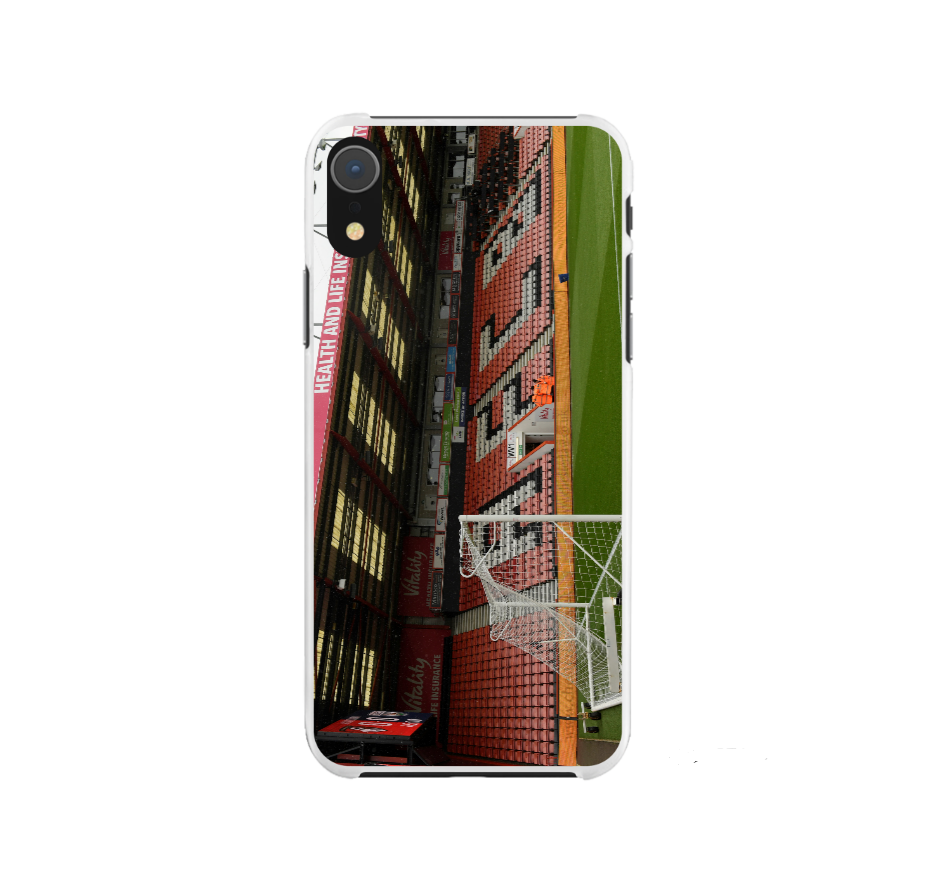
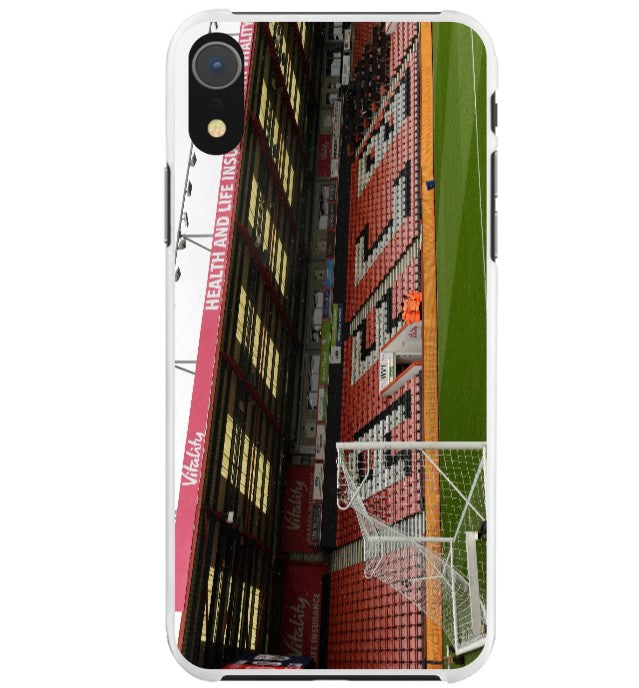
This rubber premium phone case prints a “Bournemouth Stadium” design at £4.99 with free P&P, made to order for your exact handset. It is filed under Bournemouth and is the first of four near-identical Dean Court listings with this shorter “Rubber Premium Phone Case (Free P&P)” title. It is a different catalogue family from the three “Protective Premium Hard Rubber Silicone” stadium cases elsewhere in this shop: same ground, same £4.99, same 26 handset options, a separate set of duplicate pages. This is an independent, unlicensed printed phone case depicting a football stadium, not official AFC Bournemouth merchandise.
What J E Cooper Dean actually gave the club
BCP Council’s local-history page tells the story better than any stadium guide. In 1910 J E Cooper Dean gave Boscombe FC — later AFC Bournemouth — a long-term lease on wasteland beside King’s Park, where the team had been playing; the ground was named Dean Court after him. But the gift came with a condition: he placed a restrictive covenant on the freehold, meaning all building plans had to be submitted to the Cooper Dean estate for approval before any work was done. The Bournemouth Echo’s historical feature repeats the same detail. So from the very beginning, what the club could build at its own ground was partly decided by the family that had leased it the land.
Wikipedia adds the physical context: the site was an old gravel pit, the ground was not ready for the start of the 1910-11 season, the club played on at adjacent King’s Park until December 1910, and players initially changed in a nearby hotel. One of the earliest structures was a 300-seat stand. A club that needed permission for every new stand, playing in a converted gravel pit with a hotel as its dressing room, is a long way from the Premier League — which is exactly why a Dean Court case is more interesting than a generic stadium print.
What the ground became
Dean Court was completely remodelled in 2001 with the pitch turned through 90 degrees, according to BBC Sport. It has carried several sponsored names — Seward Stadium, Goldsands Stadium and, from July 2015, Vitality Stadium — while supporters still commonly say Dean Court. Its capacity of 11,307 made it by far the smallest Premier League ground, and the record attendance of 28,799 was set at an FA Cup quarter-final against Manchester United on 2 March 1957, a 1-2 defeat to Matt Busby’s side. Councillors have since approved plans to expand capacity beyond 20,000 with a rebuilt south stand, extended north and east stands and infilled corners.
The ownership story is unusual too. BBC Sport reports that the club, then in League One, sold the ground to property company Structadene for £3.5m in 2005 and leased it back to help pay off debts of around £6.5m, then tried and failed several times to buy it back before owner Bill Foley announced a deal to do so. A stadium that was once a conditional gift, then a debt-relief sale, then a buy-back target, has had more corporate history than most grounds twice its size.
What the £4.99 buys
One printed rubber premium case for one handset at £4.99 with free P&P, with 26 listed options: iPhone 12, 12 mini, 12 Pro, 12 Pro Max, 13, 13 mini, 13 Pro, 13 Pro Max, 14, 14 Plus, 14 Pro, 14 Pro Max, 15, 15 Plus, 15 Pro, 15 Pro Max and iPhone SE (3rd generation); Samsung Galaxy S23, S24, S24 Ultra, Z Flip 5 and A15 5G; Google Pixel 7a, 8 and 8 Pro; or “other mobile phone models” with your exact handset. Check the exact model in settings before ordering — a Z Flip 5 folds and splits a wide stadium view across the hinge, and Pro Max camera cut-outs differ from standard iPhones. The listing describes a protective rubber premium case with a printed design; it is a decorative everyday case, not a rugged drop-tested one. Broad rooflines and seating blocks will read at phone size; fine stand detail will simplify.
Fit, grip and care
A rubber or soft-shell case grips a phone better than a rigid one and is easier to fit and remove, but is not armour. Wipe the print with a damp cloth and air-dry rather than using alcohol wipes, solvents or abrasive sponges, and lift the case occasionally to clear grit from the phone’s edges. Keeping it out of a pocket full of keys will do more for a detailed stadium print than any cleaning product. On a folding phone the image is interrupted by the hinge, so a standard slab handset shows the stand layout more clearly. There is no personalisation on this listing and no claim that the graphic is an officially licensed stadium photograph.
Where it sits in this shop
The three “Protective Premium Hard Rubber Silicone” stadium cases take the building, the 2001 remodelling and the away end as their angles. This shorter-title family of four continues with the naming rights, the sale-and-leaseback and the 1957 record crowd on its companion pages. The shirt cases cover Bournemouth kits from 1985 to 2024/25; the sticker pages cover terrace and fashion designs. All of these stadium cases are the same £4.99 product in the same 26 handset options, so read the descriptions rather than hunting for a difference in the product data.
Frequently asked questions
What did Bournemouth stadium used to be called? Dean Court, named after benefactor J E Cooper Dean in 1910; sponsored names have included Seward Stadium, Goldsands Stadium and Vitality Stadium since July 2015.
Is Vitality Stadium the same as Dean Court? Yes — one ground in Kings Park, Boscombe, home to the club since 1910; Dean Court is the original name and still the one supporters use.
Why is Bournemouth stadium so small? The club has said demand for tickets far outweighs its roughly 11,300 capacity; approved plans would take it beyond 20,000 seats.
Is this official AFC Bournemouth merchandise? No — a £4.99 independent, unlicensed printed phone case depicting the stadium, one of several duplicate listings in this shop.
{“@context”:”https://schema.org”,”@type”:”FAQPage”,”mainEntity”:[
{“@type”:”Question”,”name”:”What did Bournemouth stadium used to be called?”,”acceptedAnswer”:{“@type”:”Answer”,”text”:”Dean Court, named after benefactor J E Cooper Dean in 1910; sponsored names have included Seward Stadium, Goldsands Stadium and Vitality Stadium since July 2015.”}},
{“@type”:”Question”,”name”:”Is Vitality Stadium the same as Dean Court?”,”acceptedAnswer”:{“@type”:”Answer”,”text”:”Yes — one ground in Kings Park, Boscombe, home to the club since 1910; Dean Court is the original name and still the one supporters use.”}},
{“@type”:”Question”,”name”:”Why is Bournemouth stadium so small?”,”acceptedAnswer”:{“@type”:”Answer”,”text”:”The club has said demand for tickets far outweighs its roughly 11,300 capacity; approved plans would take it beyond 20,000 seats.”}},
{“@type”:”Question”,”name”:”Is this official AFC Bournemouth merchandise?”,”acceptedAnswer”:{“@type”:”Answer”,”text”:”No — a 4.99 independent, unlicensed printed phone case depicting the stadium, one of several duplicate listings in this shop.”}}
]}